GPT and Claude can write code, plan trips, and operate tools, yet their default behavior still resembles a powerful generic person. Some users want warmth and explanation; others want a direct answer in two lines. Custom instructions can tune the response, but “be concise” says little about how someone weighs speed against caution or when they want disagreement instead of reassurance. A persona carries those choices across tasks, including when the instructions run out.
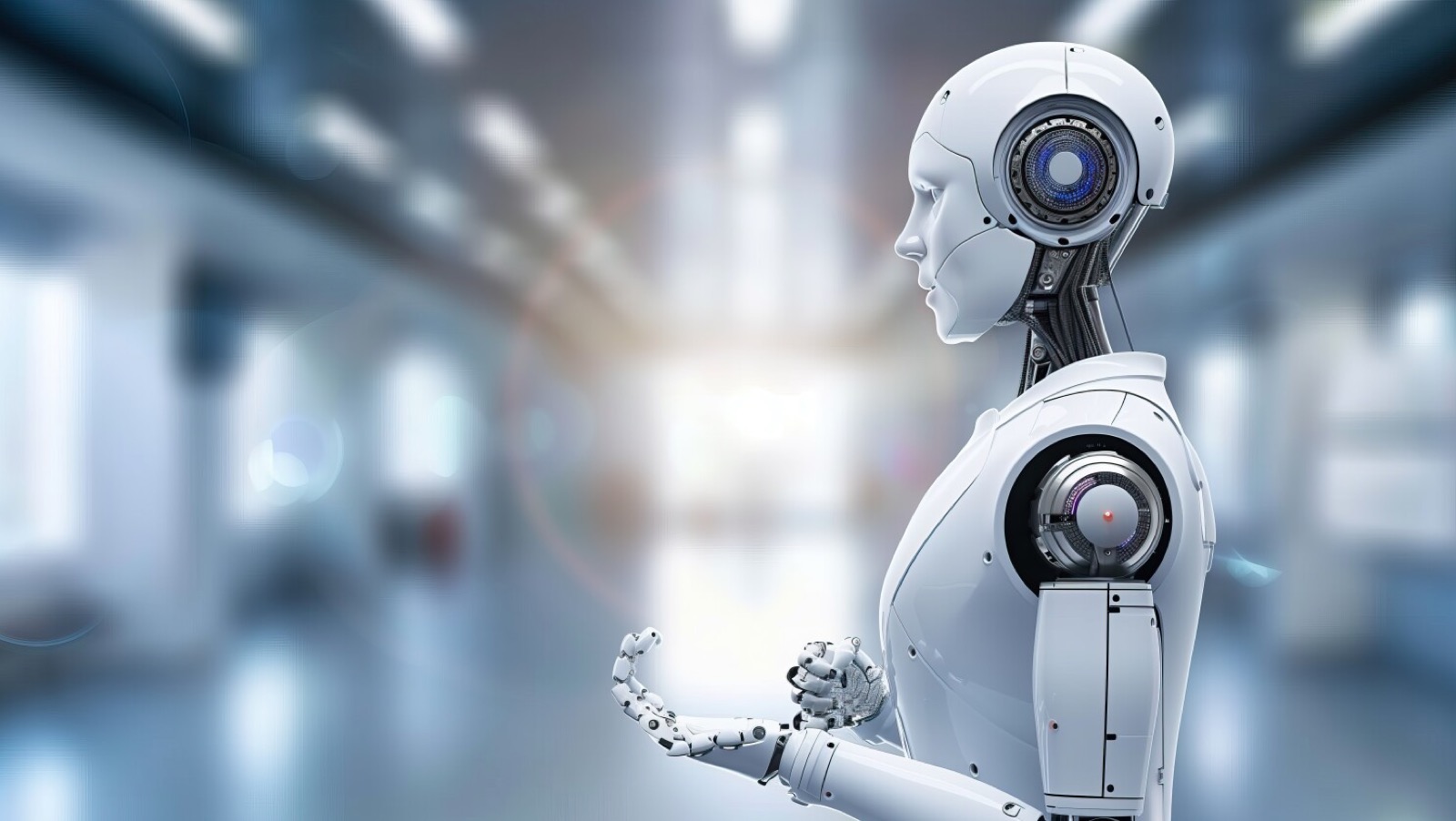
Robotics makes the gap visible. Unitree's humanoids can run, recover their balance, perform martial-arts routines, and dance. But as their bodies become more humanlike, generic behavior makes them feel less human. Future agents will work with people and with one another, so they will need distinct roles, temperaments, commitments, and boundaries. A society of identical agents would be little more than a collection of interchangeable interfaces.
1. Why character matters
Movies have understood this for decades. R2-D2, WALL-E, and Baymax are not memorable because audiences know their specifications. They are memorable because of how they move, react, and relate to the people around them. Their functions matter, but their character is what makes those functions mean something.
Games rely on the same idea. A world filled with interchangeable quest-givers quickly feels dead; an NPC becomes interesting when it has a recognizable voice, motive, and way of responding to the player. Portal would lose much of its tension without GLaDOS, and Detroit: Become Human would feel more like a technical demo if its androids were interchangeable units rather than characters.
Character makes behavior legible. A robot in a home must make small social choices: how close to stand, when to interrupt, what it may touch, and when to refuse. Intelligence tells us what the robot can do; persona tells us how it will act and for whom. Without that layer, even an impressive machine remains interchangeable.
2. What we mean by a “soul”
We do not mean consciousness or inner experience. Here, “soul” is shorthand for a durable, inspectable persona: who the agent is, who it acts for, and what boundaries guide its behavior. It has two sides.
Persona for the robot
The robot needs an identity people can understand and predict: how it speaks, how cautious it is, what it refuses, and how its behavior changes around a child or an adult. Those choices should be structured and auditable, not scattered across ad hoc rules.
Persona of the human
The robot also needs a model of the person's preferences, habits, and boundaries. Otherwise every interaction starts from zero. With an explicit, user-controlled model, it can anticipate routine choices instead of waiting to be told each time.
3. Persona has to be inspectable, not vibes
A persona cannot be just a paragraph in a prompt, especially when it controls a body. It needs sources for what the agent believes about a person, explicit limits on what the agent may do, and confidence attached to every inference. If a robot decides that a user is comfortable with it entering a bedroom, we need to know whether that came from an instruction, an observation, or a guess. That distinction can separate helpful behavior from dangerous behavior.
4. You cannot A/B test a robot in someone's kitchen
Here is why this is not cosmetic. Software products learn from live experiments: ship a variant, watch real users, keep what works. You cannot do that with a humanoid in someone's home. The cost of a bad interaction is physical, and the people in the room did not sign up to be the test set. High-stakes embodied behavior needs somewhere to fail safely before it meets a real person, and that somewhere is simulation.
5. Rehearsal before reality: population simulation for robots
This is exactly what our evaluation stack was built for. Before a behavior ships, you rehearse it against a simulated population: diverse personas, in a simulated home or workplace, reacting the way different real people would. You find where the robot frightens someone, misreads a request, or behaves unpredictably around an edge-case user, before any of it happens near a real person. Point that same machinery at a household and population simulation becomes a pre-deployment safety layer for embodied AI.
6. From assistant to representative
The second direction, the persona of the human, is where the everyday value lives. Imagine a robot that has learned, with explicit consent, how you like the kitchen organized, which interruptions you tolerate, and what you never want touched. It stops being a machine you operate and becomes a representative that acts as you would. Modeling one person's preferences and habits well enough to act on their behalf is the same capability a personal robot needs, now attached to hands. The promise comes with obligations: consent, editable memory, revocation, and hard limits on when the robot may act on a guess.
7. Two modes, and knowing when to switch
Here is a concrete guess at where this goes. A robot among people probably should not run at full model capability all the time. Most of the time it should be in a human mode: a bounded, consistent persona that is socially legible, predictable, and easy to be around. It moves, waits, and reacts like a specific person, not like an all-knowing oracle hovering in the kitchen.
Then you ask it something that actually needs horsepower, how to fix the leak under the sink, what is wrong with this contract, and it switches into model mode: the full frontier system, brought to bear for as long as the task needs, and then handed back to the persona when the question is answered.
This is where our two lines of work meet in one machine. Persona gives the robot a default self that people can actually live with. Capability control is the dial that decides how much raw model to expose, and when. The hard and interesting part is the switch itself: what triggers it, how the robot signals which mode it is in so nobody is surprised, and how it returns to being a predictable presence afterward instead of an oracle that never turns back off.
8. What transfers, and what still has to be solved
The reason this is close rather than speculative: persona for robotics is the problem we have been solving for software, with a body attached. Swap "user of an app" for "person in a room with a robot," and most of the machinery transfers.
What human simulation already gives robotics
Conceptual mapping. Each row is an existing capability from our human-simulation work and the embodied need it answers.
| Piece | Built for simulated humans | What robotics needs |
|---|---|---|
| Grounded personas | Inspectable, with provenance and boundaries | A legible identity for the robot |
| Population simulation | Rehearse diverse human response before reality | Pre-deployment safety trials |
| Individual digital twins | A representative that acts as a person would | A robot that anticipates its owner |
| Evaluation stack | Sits between benchmarks and real-world trials | Human-robot interaction testing at scale |
What still has to be solved
Porting a persona into a body is not free, and the open questions are the interesting part of the agenda.
- The embodiment gap. A simulated person reacting in text is not the same as a person reacting to a two-meter machine reaching past them. How much of a text-conditioned persona survives contact with physical presence is an empirical question.
- Behavioral sim-to-real. Robotics already worries about transferring physical control from simulation to reality. Persona adds a second transfer problem: does behavior validated against simulated humans hold up with real ones?
- Privacy and misuse. A robot that models a person accumulates an intimate profile, in the home, on a device with actuators. Data minimization, revocation, and action limits are not optional add-ons here; they are load-bearing.
9. From capability to character
The intelligence stack and the persona stack have been growing on separate tracks. As agents move from demos into daily life, the missing layer stops being personality and starts being infrastructure: who the agent is, who it thinks you are, and how confident it should be about either. That is what we mean by giving an agent a “soul,” and it is the problem we think is about to matter most.
The next wave of AI will not be won by capability alone. An agent needs a stable persona and a model of the person it serves. For robots, that software sits above the actuators; for GPT, Claude, and other digital agents, it sits between general intelligence and the individual user.
Evidence note. This is a short position piece on an early direction at MatrAIx, not a report of a completed study. Figure 1 is a conceptual mapping proposed by the authors. It builds on our human-simulation position paper.